The complete post is available where it was originally published on this site
Adobe Inc. excels in providing a comprehensive suite of creative tools that empower artists, designers, and developers across various digital disciplines. Their product landscape is the backbone of countless creative projects worldwide, ranging from web design and photo editing to vector graphics and video production.
Adobe’s internal developers use a vast array of wiki pages, software guidelines, and troubleshooting guides. Recognizing the challenge developers faced in efficiently finding the right information for troubleshooting, software upgrades, and more, Adobe’s Developer Platform team sought to build a centralized system. This led to the initiative Unified Support, designed to help thousands of the company’s internal developers get immediate answers to questions from a centralized place and reduce time and cost spent on developer support. For instance, a developer setting up a continuous integration and delivery (CI/CD) pipeline in a new AWS Region or running a pipeline on a dev branch can quickly access Adobe-specific guidelines and best practices through this centralized system.
The initial prototype for Adobe’s Unified Support provided valuable insights and confirmed the potential of the approach. This early phase highlighted key areas requiring further development to operate effectively at Adobe’s scale, including addressing scalability needs, simplifying resource onboarding, improving content synchronization mechanisms, and optimizing infrastructure efficiency. Building on these learnings, improving retrieval precision emerged as the next critical step.
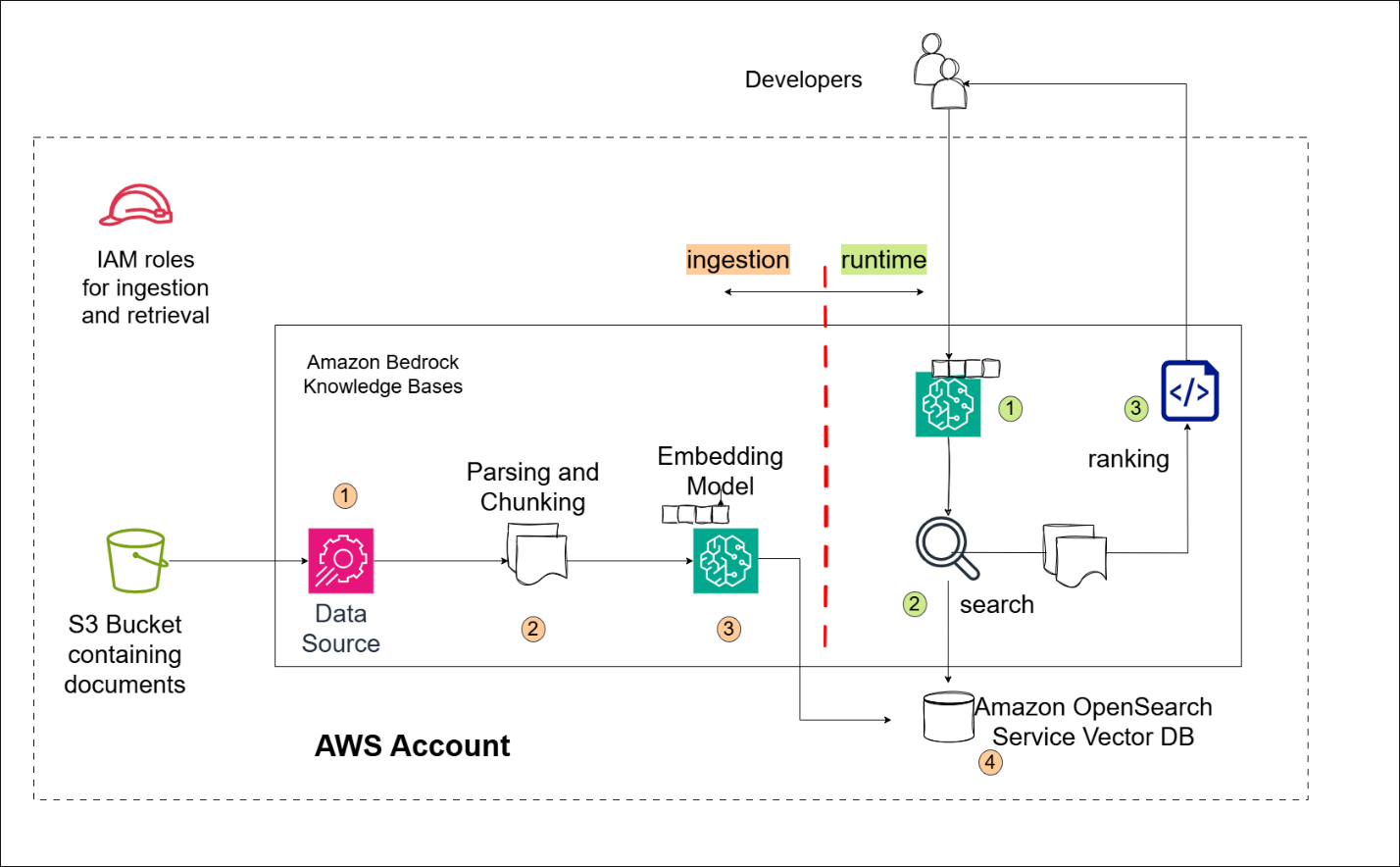
To address these challenges, Adobe partnered with the AWS Generative AI Innovation Center, using Amazon Bedrock Knowledge Bases and the Vector Engine for Amazon OpenSearch Serverless. This solution dramatically improved their developer support system, resulting in a 20% increase in retrieval accuracy. Metadata filtering empowers developers to fine-tune their search, helping them surface more relevant answers across complex, multi-domain knowledge sources. This improvement not only enhanced the developer experience but also contributed to reduced support costs.
In this post, we discuss the details of this solution and how Adobe enhances their developer productivity.
