


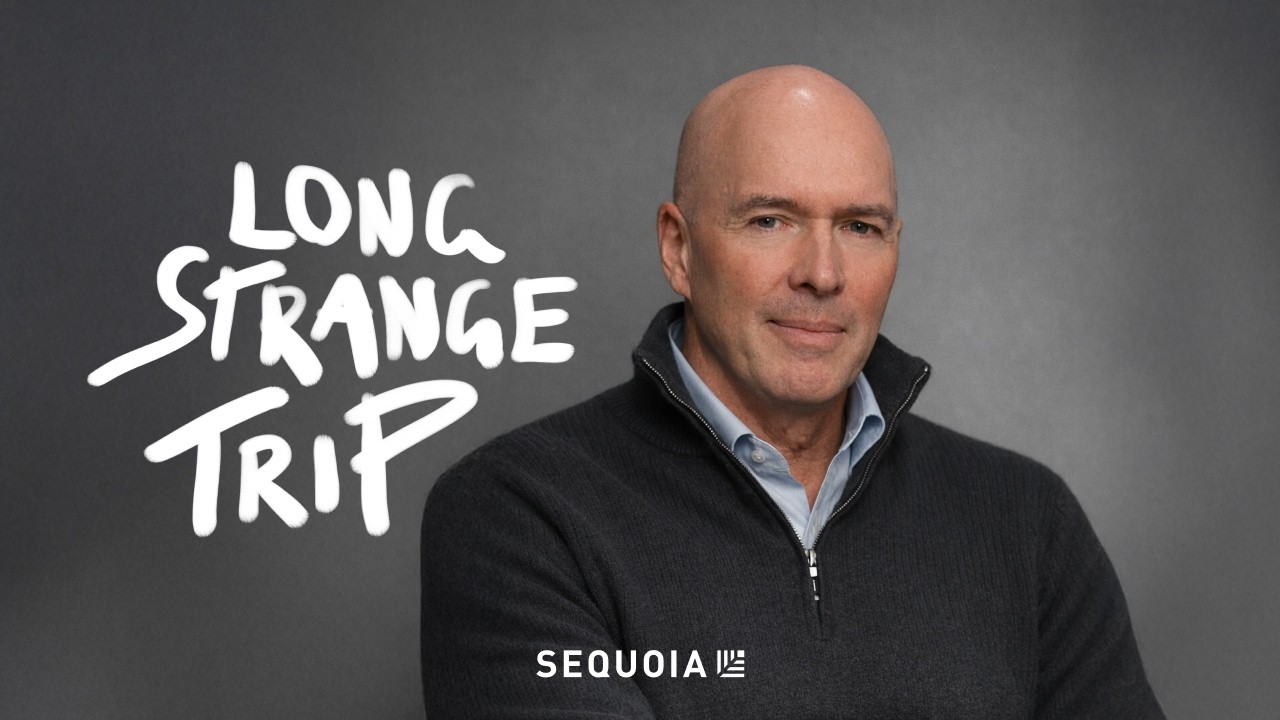

Ben Horowitz On What Makes a Great Founder


Ben Horowitz On What Makes a Great Founder
A16z’s Ben Horowitz joins me for a raw, unfiltered conversation on what actually breaks founder CEOs, and what separates the great ones from the rest.
We unpack founder mode, where it works and where people are taking it too far. Ben shares why overly deferring to experienced executives creates politics and fiefdoms, but avoiding senior talent altogether is just as risky. Founder mode is not about micromanaging. It is about taking responsibility for outcomes and having the confidence to manage people who may have more experience than you.
Ben goes deep on “constructive confrontation” and why running away from the truth to preserve feelings is one of the most dangerous things you can do in a tech company. He explains why bad news has to travel fast, how decision debt paralyzes organizations, and why hesitation, not lack of intelligence, is what usually gets CEOs replaced.
We also dive deep into hiring, especially the VP of Sales role founders mess up more than any other. Ben breaks down why great sales leaders qualify you in the interview, why references matter more than charisma, and why selling a hard product builds a different kind of operator.
Along the way, we cover the psychology of being a first-time CEO, what Zuckerberg, Jensen, and Elon actually have in common, why culture is defined by behavior not values, and why feeling like you do not know what you are doing is more normal than most founders admit.
00:00 Introduction
00:51 Why a16z Passed HubSpot
03:02 COO Role in Startups
03:58 What Makes Great CEOs
11:48 Hiring Execs and Sales Leaders
24:08 Sales Rep Profile
24:58 Interviewing for Learning
26:23 Constructive Confrontation
30:14 Founder Mode Hiring
36:39 Culture and CEO Lessons
Bayer’s Bill Anderson: Turning a 168 Year-Old Tanker Like a Speedboat
Bill Anderson runs Bayer, a 160-year-old pharmaceutical giant that had 100,000+ employees when Bill took the helm. In just two years after becoming CEO, he flattened 11 layers of management, expanded managers' direct reports from 6 to 90, and eliminated annual budgeting in favor of 90-day cycles.
Bill offers up some gems on how to scale without becoming bureaucratic, explains why "professional managers" kill startups, why peer feedback beats manager reviews, and why bureaucracy isn’t a virus that infects healthy companies but rather something that grows from within the heart of your org chart.
If you're scaling from 100 to 1,000 employees and want to avoid the death spiral that slows most growing companies, this is essential listening. Bill's created a playbook for organizational transformation that challenges what you think you know about building companies.
00:00 Introduction
01:06 Bill's Radical Changes at Bayer
01:42 The Problem with Bureaucracy
02:13 Scaling Without Bureaucracy
02:36 Bill's Approach to Management
05:54 Flattening the Organization
11:54 Dynamic Resource Allocation
29:34 Peer Feedback and Performance Reviews
35:16 Thoughts on Organizational Transformation
36:50 The Debate on Job Titles
37:53 Personal Experience with Titles at HubSpot
39:03 Organizational Structure and Influence
42:06 Implementing 90-Day Cycles
44:08 Reflections on Leadership and Change
46:54 Inspiration and Turnaround Stories
47:53 Challenges of Bureaucracy
52:36 Advice for Aspiring CEOs
58:50 Internal vs. External CEO Hires
01:08:14 Final Thoughts and Recommendations
Building the GitHub for RL Environments: Prime Intellect's Will Brown & Johannes Hagemann
Will Brown and Johannes Hagemann of Prime Intellect discuss the shift from static prompting to "environment-based" AI development, and their Environments Hub, a platform designed to democratize frontier-level training.
The conversation highlights a major shift: AI progress is moving toward Recursive Language Models that manage their own context and agentic RL that scales through trial and error. Will and Johannes describe their vision for the future in which every company will become an AI research lab. By leveraging institutional knowledge as training data, businesses can build models with decades of experience that far outperform generic, off-the-shelf systems.
Hosted by Sonya Huang, Sequoia Capital
00:00 Introduction
01:50 Understanding Frontier Lab Training and RL Hub
02:53 The Importance of Customization in AI Models
04:36 Harnessing the Power of Environments in AI
23:14 Evaluating Data Quality with Reinforcement Learning
24:17 Constructing Realistic Cybersecurity Environments
25:12 Designing Efficient Simulation Environments
29:04 The Role of Human Data in Model Training
33:29 Future Research and Vision
What’s the Future of Vertical SaaS in an AGI World? Jamie Cuffe, CEO of Pace
Jamie Cuffe is solving one of AI's hardest problems: getting conservative, regulated industries to trust autonomous agents with mission-critical work. At Pace, he's building AI that replaces traditional BPOs in insurance, handling everything from email triage to claims processing with 50-75% cost savings. Drawing on his experience at Retool, Jamie emphasizes the importance of "closing the distance" with customers through forward-deployed engineering and being "the rock" that clients can rely on. He shares how focusing on top-tier insurance carriers and maintaining exceptionally high standards is enabling Pace to capture a meaningful share of the $400 billion BPO market while building a durable business model - at AI-native velocity.
Hosted by Lauren Reeder and Pat Grady, Sequoia Capital
00:00 Introduction
01:35 The Evolution of Insurance BPOs
04:31 AI's Role in Transforming Insurance
07:58 Building Trust and Success with AI
27:32 Setting the Pace: The Final Principle
28:45 The Bigger Mission: Beyond Insurance
31:06 Transforming the Services Market with AI
35:12 Onsite Implementation and Success Metrics
42:25 Reflections and Advice for AI Founders
The Wartime CEO: Vlad Tenev of Robinhood
In this episode, Vlad Tenev pulls back the curtain on what it takes to lead through the kind of crises that would break most CEOs. From waking up at 5 AM to raise $3 billion in a few hours during the GameStop frenzy to navigating a 90% stock price drop, Vlad shares how he stays unflappable when everything is falling apart.
We go deep on why "it's always wartime" should be your default mindset, not the exception. Vlad breaks down how he maintains breakneck speed at scale, why he limits planning to days instead of weeks, and how product events create forcing functions that keep thousands of employees moving with startup urgency. He discusses the counterintuitive truth that, if you need something done fast, you should give it to your busiest person.
We also explore the mechanics of rebuilding trust after very public failures, why co-CEOs might actually work better than investors think, and how Vlad stays connected to customers despite leading 15,000 employees.
This conversation is essential listening for any founder trying to build resilience, any operator at a scaling company, or anyone who wants to understand what separates good CEOs from legendary ones.
Making the Case for the Terminal as AI's Workbench: Warp’s Zach Lloyd
Zach Lloyd built Warp to modernize the terminal for professional developers, but the rise of coding agents transformed his company's trajectory. He discusses the convergence of IDEs and terminals into new workbenches built for prompting and agent orchestration, and why he thinks "coding will be solved" within a few years, making human expression of intent the ultimate bottleneck. Zach explains how Warp competes against subsidized tools from Anthropic and OpenAI, and why the terminal's time-based, text-oriented format makes it perfect for managing swarms of cloud agents.
Hosted by Sonya Huang, Sequoia Capital
00:00 Introduction
01:20 Meet Zach Lloyd: Founder of Warp
01:50 The Evolution of Warp: From Terminal to Agent Workbench
02:14 The Importance of the Terminal in Modern Development
03:11 Single Player vs Multiplayer Terminal Use
10:19 The Competitive Landscape of Coding Tools
10:57 Warp's Unique Position and Product Approach
17:03 Pricing Strategies and Challenges
19:52 Harnessing Models for Optimal Developer Experience
24:10 Summarizing and Truncating Outputs
24:27 Engineering and Measuring for Better Performance
24:56 Public Benchmarks and User Data
25:35 Tab Auto Complete Models
26:12 Future of Coding Interfaces
26:48 Cloud Agents and Orchestration Platforms
28:51 Building Agent Hosting and Management Layers
30:24 Scaling Law Charts and Agent Run Time
33:40 Challenges in Agentic Development
33:49 Frontier Model Capabilities
35:41 Bottlenecks in Agent Performance
37:58 Error Frequency and Verification
39:41 Super Intelligence and Coding Models
41:50 Economic Impact of Coding Tools
43:47 Coding as an Art Form
47:12 Conclusion and Final Thoughts
Context Engineering Our Way to Long-Horizon Agents: LangChain’s Harrison Chase
Harrison Chase, cofounder of LangChain and pioneer of AI agent frameworks, discusses the emergence of long-horizon agents that can work autonomously for extended periods. Harrison breaks down the evolution from early scaffolding approaches to today's harness-based architectures, explaining why context engineering - not just better models - has become fundamental to agent development. He shares insights on why coding agents are leading the way, the role of file systems in agent workflows, and how building agents differs from traditional software development - from the importance of traces as the new source of truth to memory systems that enable agents to improve themselves over time.
Hosted by Sonya Huang and Pat Grady
Harvey CEO Winston Weinberg: Why You Should Reinvent Yourself Every 4 Months
This might be my favorite episode yet.
Harvey’s Winston Weinberg is the canonical 2026 hypergrowth CEO. He takes us inside what it's really like to scale from zero to $190M run rate in just a few years. What stands out? His obsessive intensity and willingness to do uncomfortable things on a weekly basis.
Winston shares how he cold-messaged thousands of lawyers to land his first customers, why he deliberately chose the hardest enterprise law firms as his first target customers, and how he thinks about hiring and org structure when everything breaks every four months. We also explore his unconventional background - he wasn't a developer, was new to the legal industry, and figured out sales from scratch.
It's raw, honest, and incredibly practical for any founder navigating (or hoping to navigate) the chaos of hypergrowth.
How Ricursive Intelligence’s Founders are Using AI to Shape The Future of Chip Design
Anna Goldie and Azalia Mirhoseini created AlphaChip at Google, using AI to design four generations of TPUs and reducing chip floor planning from months to hours. They explain how chip design has become the critical bottleneck for AI progress -- a process that typically takes years and costs hundreds of millions of dollars. Now at Ricursive Intelligence, they're enabling an evolution of the industry from “fabless” to "designless," where any company can create custom silicon with Ricursive Intelligence. Their vision: recursive self-improvement where AI designs more powerful chips, and faster, accelerating AI itself.
Hosted by Stephanie Zhan and Sonya Huang
Palo Alto Networks CEO Nikesh Arora on the Virtues of Being an Outsider
He didn’t come up through cybersecurity. He wasn’t a founder. And when he took over Palo Alto Networks, he openly admits he didn’t know what cybersecurity even meant. Today, under his leadership, Palo Alto has become one of the most successful platform companies in enterprise software.
In this episode, Nikesh and I go deep on what it actually means to be a modern CEO. We talk about why founders should sometimes not listen to customers, why most M&A fails, and how Palo Alto built a multi-platform business by betting big (and early) on second acts. Nikesh breaks down his very unconventional approach to acquisitions, where founders run the acquiring company’s teams, not the other way around. He explains how platform companies are built one decisive product insight at a time, why “more features” is often a trap, and how great CEOs balance product obsession with go-to-market reality. We also spend time on leadership psychology: imposter syndrome, conviction, risk appetite, and how to project confidence while you’re still figuring things out, and how to remain physically and emotionally healthy while you do it.
If you’re a founder, an operator, or an aspiring CEO thinking about second acts, platforms, or scaling yourself along with your company, this episode is a masterclass.
Training General Robots for Any Task: Physical Intelligence’s Karol Hausman and Tobi Springenberg
Physical Intelligence’s Karol Hausman and Tobi Springenberg believe that robotics has been held back not by hardware limitations, but by an intelligence bottleneck that foundation models can solve. Their end-to-end learning approach combines vision, language, and action into models like π0 and π*0.6, enabling robots to learn generalizable behaviors rather than task-specific programs. The team prioritizes real-world deployment and uses RL from experience to push beyond what imitation learning alone can achieve. Their philosophy—that a single general-purpose model can handle diverse physical tasks across different robot embodiments—represents a fundamental shift in how we think about building intelligent machines for the physical world.
Hosted by Alfred Lin and Sonya Huang, Sequoia Capital
Goldman Sachs CEO David Solomon: What Startup Founders Get Wrong About the CEO Job
David Solomon, CEO of Goldman Sachs, says that no easy decisions reach the CEO’s desk - only “51/49” decisions. When I was leading HubSpot, I described the job as “choosing between two shitty options.”
David discusses some of the tough calls he’s had to make in the CEO seat, including the difficult decision to wind down Goldman's consumer banking ambitions. His perspective coming from a 156-year old banking giant is a little different than the common Silicon Valley wisdom. Hear why he thinks experience is vastly underrated in Silicon Valley, why "smart enough" matters more than being the smartest person in the room, and why serendipity and timing play bigger roles in being a great CEO than people realize.
David reflects on mentorship from Lloyd Blankfein and Hank Paulson and how he thinks apprenticeship culture will evolve with AI. There are some great, unexpected lessons here for founders who are scaling, confronting the messy reality of building enduring companies.
00:00 Introduction
00:58 Decision Making and Culture at Goldman Sachs
01:55 Leadership and Mentorship Insights
07:19 Balancing Strengths and Weaknesses
09:33 Experience vs. Intelligence in Leadership
15:39 Navigating Failures and Accountability
17:49 The Consumer Business Decision
27:23 Partnerships and Strategic Decisions
29:02 Focusing on Shareholders, Employees, and Customers
29:54 Client Centricity and Core Values
30:37 Balancing Clients, Shareholders, and Employees
32:26 Scaling and Growth Strategies
33:42 Culture and Adaptation
39:08 Navigating Challenges and Pivots
45:12 The Role of Technology and AI
48:40 David's Personal Insights and Reflections
50:45 Final Thoughts and Advice
Error 400: API key not valid. Please pass a valid API key..
Domain code: global
Reason code: badRequest